
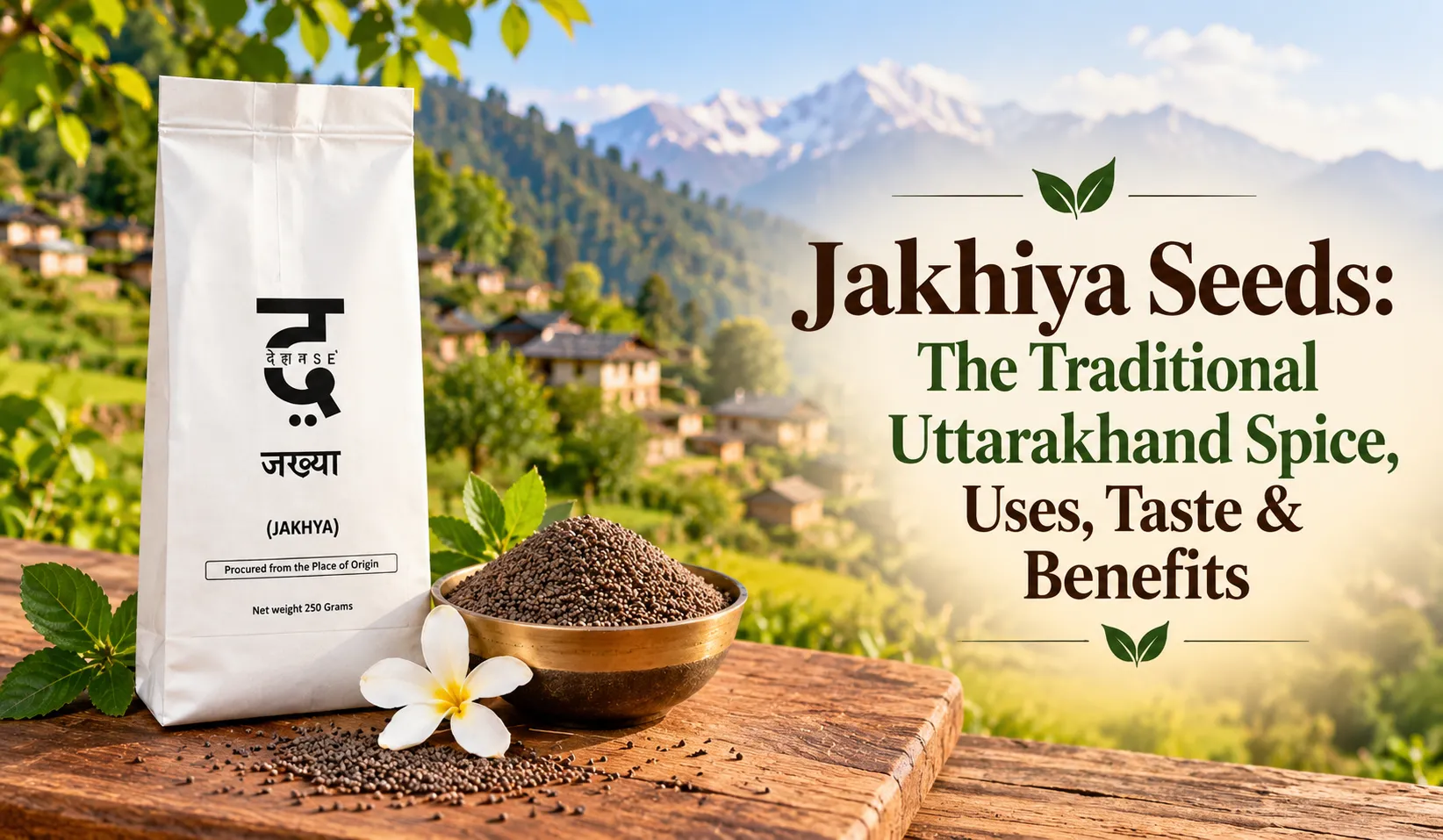
Jakhiya Seeds may not be as familiar as jeera or mustard seeds, but in the kitchens of Uttarakhand, they have long had their own place. These tiny seeds are traditionally used for tempering vegetables and other everyday dishes, where they add a distinctive aroma and a pleasantly crunchy texture.
For someone discovering Uttarakhand food for the first time, Jakhiya is an interesting ingredient to start with. It does not require an elaborate recipe or complicated cooking technique. A small amount added to hot oil can change the character of a simple potato or vegetable dish.
Jakhiya is particularly associated with the food traditions of Uttarakhand and other parts of the Himalayan region. Its use reflects something common in regional Indian cooking: local communities making everyday food distinctive through ingredients available around them.
Today, interest in regional Indian ingredients has brought Jakhiya beyond Pahadi kitchens. People looking for traditional Uttarakhand foods, lesser-known Indian spices and new ways to prepare everyday vegetables are beginning to discover it.
But what exactly is Jakhiya? Is it the same as jeera? What does it taste like, and how should you use it?
This guide explores Jakhiya Seeds, their connection with Uttarakhand, traditional culinary uses, flavour, cooking method, storage and what to look for when buying them.
What Are Jakhiya Seeds?
Jakhiya Seeds are tiny seeds traditionally used as a tempering ingredient in Uttarakhand cuisine.
They are commonly associated with Cleome viscosa, a plant found in tropical and subtropical regions. In Uttarakhand, the seeds collected from the plant are known locally as Jakhiya, with spellings such as Jakhya and Jakhia also commonly seen.
In the kitchen, Jakhiya is used somewhat like other Indian tempering spices.
A small quantity of seeds is added to hot oil and allowed to crackle before vegetables or other ingredients are added.
However, Jakhiya should not simply be considered another name for cumin or mustard.
It is a separate ingredient with its own flavour, aroma and cooking characteristics.
One of its most noticeable qualities is its texture. Once tempered, the tiny seeds can provide a pleasant crunch that complements simple vegetable preparations particularly well.
This combination of aroma, flavour and texture is one reason Jakhiya remains closely associated with traditional Pahadi cooking.
What is Jakhiya Called in English?
There is no single everyday English culinary name for Jakhiya that is as widely recognised as terms such as “cumin” for jeera or “mustard seeds” for rai.
Jakhiya, Jakhya or Jakhia therefore remains the most useful name when looking for the ingredient.
Jakhiya is commonly associated botanically with Cleome viscosa. The plant itself is known by different common names in English and in different regions, which can sometimes create confusion when shopping online.
For cooking purposes, searching for Jakhiya Seeds, Jakhya Seeds or Uttarakhand Jakhiya is generally clearer than relying on a translated English name.
It is also worth checking the botanical and sourcing information provided by the seller because regional names can sometimes be applied inconsistently to plants and seeds.
Where Do Jakhiya Seeds Come From?
Jakhiya is strongly associated with Uttarakhand, where it forms part of traditional regional cooking.
Uttarakhand’s cuisine has developed around its geography, climate, locally available crops and everyday agricultural practices. Different parts of the state have their own ingredients and cooking traditions, and many Pahadi dishes are characterised by relatively straightforward preparation.
Instead of relying on complicated spice blends, a dish may develop its character from just a few well-chosen ingredients.
Jakhiya is one such ingredient.
Jakhiya in Uttarakhand
In Uttarakhand cooking, Jakhiya is particularly valued as a tempering ingredient.
It can be heated in oil before vegetables are added, giving otherwise simple preparations a distinctly Pahadi character.
Potatoes and seasonal vegetables are especially natural partners for this style of cooking.
The importance of Jakhiya is therefore not necessarily about making a dish heavily spiced. Its appeal lies in how a small quantity can contribute aroma, flavour and texture.
For people who grew up eating traditional Uttarakhand food, that characteristic crackle of Jakhiya in hot oil can be a familiar part of home cooking.
For people outside the region, it offers a simple introduction to a different side of Indian cuisine.
How Are Jakhiya Seeds Obtained?
Jakhiya Seeds come from the mature seed-bearing parts of the plant.
Once the plant reaches maturity and the seeds are ready, they can be collected, dried and cleaned before being stored for culinary use.
The exact methods of collection and processing can differ according to the location, producer and scale of production.
Proper drying is particularly important for seeds intended for storage.
Excess moisture can reduce storage quality and encourage spoilage. After drying, seeds need to be cleaned to remove unwanted plant matter, soil and other foreign material.
When buying packaged Jakhiya, the seeds should therefore appear dry, reasonably clean and free from visible contamination.
What Do Jakhiya Seeds Look Like?
Jakhiya Seeds are quite small, particularly when compared with many familiar Indian spices.
Their small size is one of the first things a new user may notice.
They generally have a dark, earthy appearance, although natural variation can occur depending on the source, maturity and processing of the seeds.
Good culinary Jakhiya should look properly dried and clean.
Because Jakhiya is a natural agricultural product, expecting every seed to be absolutely identical in size and appearance is unnecessary.
More important signs of quality include cleanliness, dryness, natural aroma and the absence of insects, mould or unusual smells.
What Does Jakhiya Taste Like?
Jakhiya has a distinctive flavour that is difficult to understand simply by comparing it with cumin or mustard.
Its real character becomes more apparent when the seeds are tempered in hot oil.
As they heat, the seeds begin to crackle and release their aroma. Once properly tempered, they can also contribute a subtle crunchy texture to the finished dish.
This texture is one of the features that makes Jakhiya particularly enjoyable in relatively dry vegetable preparations.
The idea is not to overwhelm the vegetable with spice.
Instead, Jakhiya acts as a small but noticeable background element, adding character to otherwise simple ingredients.
That makes it particularly suitable for potatoes and everyday seasonal vegetables.
How to Use Jakhiya Seeds in Cooking
If you already know how to make an Indian tadka, learning to use Jakhiya is straightforward.
The most common technique is tempering the seeds in hot oil.
Simple Jakhiya Tadka
Start by heating a small amount of cooking oil in a pan.
Once the oil is hot, add a small quantity of Jakhiya Seeds.
Allow the seeds to crackle.
Be attentive at this stage because small seeds can burn if left over high heat for too long.
Once they have crackled and released their aroma, continue with the other ingredients in your recipe.
Depending on what you are cooking, you may add chillies, vegetables, potatoes or other seasonings.
The basic process is:
- Heat the oil.
- Add Jakhiya Seeds.
- Allow them to crackle.
- Avoid burning them.
- Add the remaining ingredients.
- Cook the dish as required.
If you are using Jakhiya for the first time, begin with a small amount. You can then adjust it in future recipes according to your taste.
What is Jakhiya Tadka?
“Tadka” simply refers to the Indian technique of heating spices in oil or ghee so that their flavours and aromas are released.
Different regions use different ingredients for tempering.
Jeera is common in many North Indian kitchens. Mustard seeds are widely used in several regional cuisines. Other tempering ingredients can include hing, curry leaves, chillies, fenugreek and ajwain.
In parts of Uttarakhand, Jakhiya has its own place in this tradition.
When Jakhiya is dropped into hot oil, the seeds crackle. This releases their characteristic aroma and also gives them a texture that remains noticeable in the finished dish.
Jakhiya tadka can be particularly effective in simple recipes because there are fewer competing spices.
The flavour of the ingredient itself gets a chance to stand out.
Traditional Ways to Cook with Jakhiya
One of the easiest ways to appreciate Jakhiya is to use it with vegetables.
It does not necessarily need a rich gravy or a long list of spices.
Jakhiya Aloo
Potatoes provide a simple base for experiencing Jakhiya.
Heat oil in a pan and allow the Jakhiya Seeds to crackle.
You can then add chillies or other seasonings according to your preference, followed by potatoes.
Season with salt and cook until the potatoes are tender and lightly coated with the tempering.
The result is quite different from a heavily masala-based potato curry.
The simplicity allows the texture and aroma of the Jakhiya to remain noticeable.
Seasonal Vegetables
Jakhiya can also work with seasonal vegetables prepared in a relatively simple Pahadi style.
Instead of adding several powdered spices, the cook can allow the natural flavour of the vegetable and the tempering to form the foundation of the dish.
Leafy Vegetables
Leafy greens can also be prepared with simple tempering techniques.
When using Jakhiya, the objective is generally not to dominate the greens but to provide another layer of aroma and texture.
Everyday Pahadi-Style Sabzi
This is perhaps where Jakhiya makes the most sense.
It is an everyday ingredient rather than something that needs to be saved for elaborate meals.
A vegetable, oil, Jakhiya, chilli, salt and a few additional ingredients can be enough to create a flavourful home-style preparation.
Jakhiya Seeds vs Jeera
Because both ingredients can be used for tempering, people unfamiliar with Jakhiya sometimes compare it with jeera.
They are not the same ingredient.
| Feature | Jakhiya Seeds | Jeera (Cumin) |
|---|---|---|
| Culinary identity | Traditional regional tempering ingredient | Widely used Indian spice |
| Association | Particularly associated with Uttarakhand cuisine | Used throughout India and internationally |
| Appearance | Very small, dark seeds | Elongated brown seeds |
| Cooking method | Often crackled in hot oil | Whole seeds commonly tempered in oil |
| Texture | Can provide a noticeable crunch | Generally used more for flavour and aroma |
| Availability | More regional/specialised | Widely available |
| Common use | Pahadi vegetables and regional preparations | Dal, curries, rice, vegetables and spice blends |
Jakhiya should therefore not be viewed merely as a substitute for cumin.
Both can perform the broad function of tempering, but the sensory result is different.
If a traditional Uttarakhand recipe specifically calls for Jakhiya, replacing it with cumin may still produce a tasty dish, but it will not create exactly the same flavour or texture.
Jakhiya vs Mustard Seeds
Mustard seeds are another familiar tadka ingredient, so the comparison is useful.
Both mustard and Jakhiya can crackle when heated in oil, but they are different seeds with different flavour profiles.
Mustard seeds have their own distinctive pungency and are strongly associated with several Indian regional cuisines.
Jakhiya has a different regional identity and is particularly connected with Pahadi cooking in Uttarakhand.
For someone exploring regional cuisine, the point is not to determine which spice is “better.”
It is to understand what each ingredient contributes to the food.
Jakhiya vs Ajwain
Jakhiya should not be confused with ajwain either.
Ajwain has a very distinctive, strong aroma and is used in dishes ranging from parathas and pakoras to certain dals and digestive preparations.
Jakhiya is a separate ingredient.
Although both are seeds used in Indian kitchens, their flavours and traditional culinary applications are different.
This distinction matters when buying Jakhiya online because unfamiliar regional ingredients can sometimes be incorrectly compared with more common spices.
Nutritional Value of Jakhiya Seeds
Jakhiya is primarily used as a spice or tempering ingredient, which means the amount eaten in a typical dish is usually relatively small.
Seeds naturally contain a range of plant compounds and nutrients, but detailed nutritional composition can vary according to species, growing environment and processing.
For consumers, it is important not to assume that nutritional values listed for unrelated seeds also apply to Jakhiya.
If a packaged Jakhiya product provides a nutrition panel, that label is the most relevant source for understanding the nutritional composition of that particular product.
Jakhiya is best appreciated primarily for its culinary role rather than treated as a food that needs to supply a large proportion of your daily nutrition.
What Are the Benefits of Jakhiya Seeds?
Online descriptions of traditional ingredients sometimes turn ordinary foods into supposed cures for almost every health condition.
Jakhiya should be approached more carefully.
Its clearest practical benefit is culinary: it provides flavour, aroma and texture and helps people prepare traditional Uttarakhand-style food.
The plant associated with Jakhiya has also appeared in traditional and ethnobotanical contexts. However, a traditional use should not automatically be interpreted as a clinically proven medical benefit.
Scientific research into plant compounds also does not necessarily mean that eating normal culinary quantities of the seeds will prevent or treat a particular disease.
For everyday consumers, Jakhiya is better viewed as a traditional culinary ingredient that can add variety to the diet.
Anyone seeking to use a plant or seed specifically for a medical condition should seek appropriate professional advice rather than relying on food-blog claims.
Why Jakhiya Matters in Uttarakhand Cuisine
India’s regional cuisines are shaped not only by famous dishes but also by small everyday ingredients.
Jakhiya is a good example.
Many people outside Uttarakhand may know dishes associated with the state but still be unfamiliar with the seeds and seasonings used in ordinary Pahadi homes.
Ingredients such as Jakhiya help give regional cooking its own identity.
Its importance also demonstrates how different Indian tempering traditions can be.
Travel from one region to another and the ingredients hitting the hot oil at the beginning of a recipe can change considerably.
One kitchen may begin with cumin.
Another may begin with mustard.
Elsewhere, curry leaves and chillies may dominate the tadka.
In a traditional Uttarakhand preparation, Jakhiya may provide that defining first crackle.
This is part of what makes regional Indian cooking so varied.
Can You Use Jakhiya in Everyday Cooking?
Yes.
You do not have to prepare an elaborate Uttarakhand meal every time you use Jakhiya.
Once you understand how the seeds behave in hot oil, you can experiment with them in simple home cooking.
Try Jakhiya with:
- Potatoes
- Seasonal vegetables
- Leafy greens
- Simple stir-fried vegetables
- Traditional Pahadi-style sabzi
When experimenting, start with familiar dishes.
For example, instead of making your regular jeera aloo, prepare potatoes with Jakhiya tempering and compare the difference.
This is a simple way to understand an unfamiliar spice.
How Much Jakhiya Should You Use?
Jakhiya is used as a seasoning rather than as the main ingredient.
You generally do not need a large amount.
For first-time cooking, use a modest quantity and see how the flavour and texture work with your recipe.
The ideal amount will depend on the quantity of vegetables being cooked, the recipe and personal preference.
Using too much of any tempering spice can overwhelm a simple dish, so beginning conservatively is usually the better approach.
How to Choose Good Quality Jakhiya Seeds
Because Jakhiya is still a relatively specialised ingredient outside Uttarakhand, sourcing deserves attention.
Start by checking the seeds themselves.
Good-quality dried Jakhiya should generally be:
- Properly dried
- Clean
- Free from excessive dust and debris
- Free from visible insects
- Free from mould
- Free from unusual or musty odours
- Properly packaged
Natural agricultural products can have some variation in appearance, so perfect visual uniformity should not be the only measure of quality.
Check the Source
If you specifically want Uttarakhand Jakhiya, look for clear origin or sourcing information.
A product simply carrying words such as “Pahadi” or “Himalayan” on its packaging does not by itself establish where it came from.
Check the seller’s product information and packaging.
For packaged food, also look for appropriate information such as:
- Product name
- Net quantity
- Packing details
- Best-before information
- Storage instructions
- Manufacturer or seller information
- Required food-safety labelling
Transparent sourcing is particularly useful when purchasing regional products online.
How to Store Jakhiya Seeds
Like most dried spices and seeds, Jakhiya should be protected from moisture, excessive heat and direct sunlight.
Transfer the seeds to a clean airtight container after opening if the original package cannot be properly resealed.
Store the container in a cool, dry place.
Keep it away from the cooking stove if that area regularly becomes hot or humid.
Always use a clean, dry spoon when removing seeds from the container.
Moisture introduced by a wet spoon can affect the quality of stored spices.
For packaged Jakhiya, follow the storage instructions and best-before information printed by the manufacturer.
If the seeds develop mould, insect infestation or an unusual smell, they should not be used.
FAQs
What are Jakhiya Seeds?
Jakhiya Seeds are small seeds traditionally used as a tempering ingredient in Uttarakhand cuisine. They are commonly associated with Cleome viscosa and are particularly valued for the aroma and crunchy texture they can add when crackled in hot oil.
What is Jakhiya called in English?
Jakhiya does not have one universally familiar culinary English name comparable with cumin or mustard. The names Jakhiya, Jakhya and Jakhia are therefore commonly used. The plant associated with culinary Jakhiya is generally identified botanically as Cleome viscosa.
Is Jakhiya the same as cumin?
No. Jakhiya and cumin are different ingredients. Both can be used for tempering, but their appearance, flavour, texture and traditional culinary uses differ.
Is Jakhiya the same as mustard seeds?
No. Jakhiya and mustard seeds come from different plants and have different flavours and culinary traditions. Both may crackle when heated in oil, but they should not be considered the same spice.
Where is Jakhiya used in India?
Jakhiya is particularly associated with Uttarakhand and Pahadi cuisine. It is traditionally used as a tempering ingredient in simple vegetable preparations and other regional dishes.
What does Jakhiya taste like?
Jakhiya develops its characteristic aroma when heated in oil. The tempered seeds can also provide a pleasant crunchy texture, which works particularly well with potatoes and simple vegetable dishes.
How do you use Jakhiya Seeds?
Heat oil in a pan, add a small amount of Jakhiya and allow the seeds to crackle. Once tempered, add the remaining ingredients for your dish. Take care not to burn the seeds.
Can Jakhiya be used for tadka?
Yes. Tadka or tempering is one of the best-known culinary uses of Jakhiya. The seeds are added to hot oil and allowed to crackle before the other ingredients are introduced.
What dishes can be prepared with Jakhiya?
Jakhiya works particularly well with potatoes, seasonal vegetables, leafy greens and simple Pahadi-style vegetable preparations.
What are the benefits of Jakhiya Seeds?
Jakhiya is primarily valued as a traditional culinary ingredient that adds flavour, aroma and texture to food. Although the associated plant has a history of traditional uses and scientific interest, medicinal claims should not be confused with the benefits of consuming normal culinary quantities of Jakhiya.
How should Jakhiya Seeds be stored?
Keep them in a clean, airtight container in a cool, dry place away from moisture and direct sunlight. Follow the storage and best-before instructions provided with packaged products.
How can I identify good-quality Jakhiya?
Look for properly dried, clean seeds without mould, insects, excessive foreign material or an unusual smell. When buying Uttarakhand Jakhiya, also check the product’s source and seller information.
Why Jakhiya Seeds Are Worth Discovering
Jakhiya Seeds show how even a tiny ingredient can play an important role in regional food.
For Uttarakhand cuisine, Jakhiya is more than another spice sitting in a masala box. Its distinctive crackle in hot oil, subtle flavour and crunchy texture make it particularly well suited to the simple vegetable preparations found in Pahadi home cooking.
It is also remarkably easy to use.
You do not need a complicated recipe to begin. Potatoes, seasonal vegetables, a little oil and Jakhiya can be enough to understand why this ingredient has remained part of Uttarakhand’s culinary traditions.
For people outside the region, trying Jakhiya is also an opportunity to explore Indian cooking beyond the familiar combinations of cumin, mustard and common spice blends.
When purchasing Jakhiya, pay attention to its source, cleanliness, packaging and storage information. Once opened, keep the seeds dry and airtight so their quality is maintained.
If you enjoy discovering regional Indian ingredients, Jakhiya Seeds from Uttarakhand are certainly worth adding to your kitchen.
Looking to bring a little more Uttarakhand flavour into your everyday cooking? Explore Jakhiya Seeds from Dehaat Se and try them in your next potato or seasonal vegetable preparation.